OP-Stack
ToC
- Intro to OP-Stack
- about OP-Stack
- Ecosystem explanation
- Architecture
- brief introduction on the architecture of OP-Stack
- Interoperability: Understand how interoperability occurs
- Code Overview: explanation on the overall code structure
- Modifications
- hacks that can be done with OP-Stack
- Data
- Ecosystem
- Resource
- to understand OP-Stack
Intro to OP-Stack
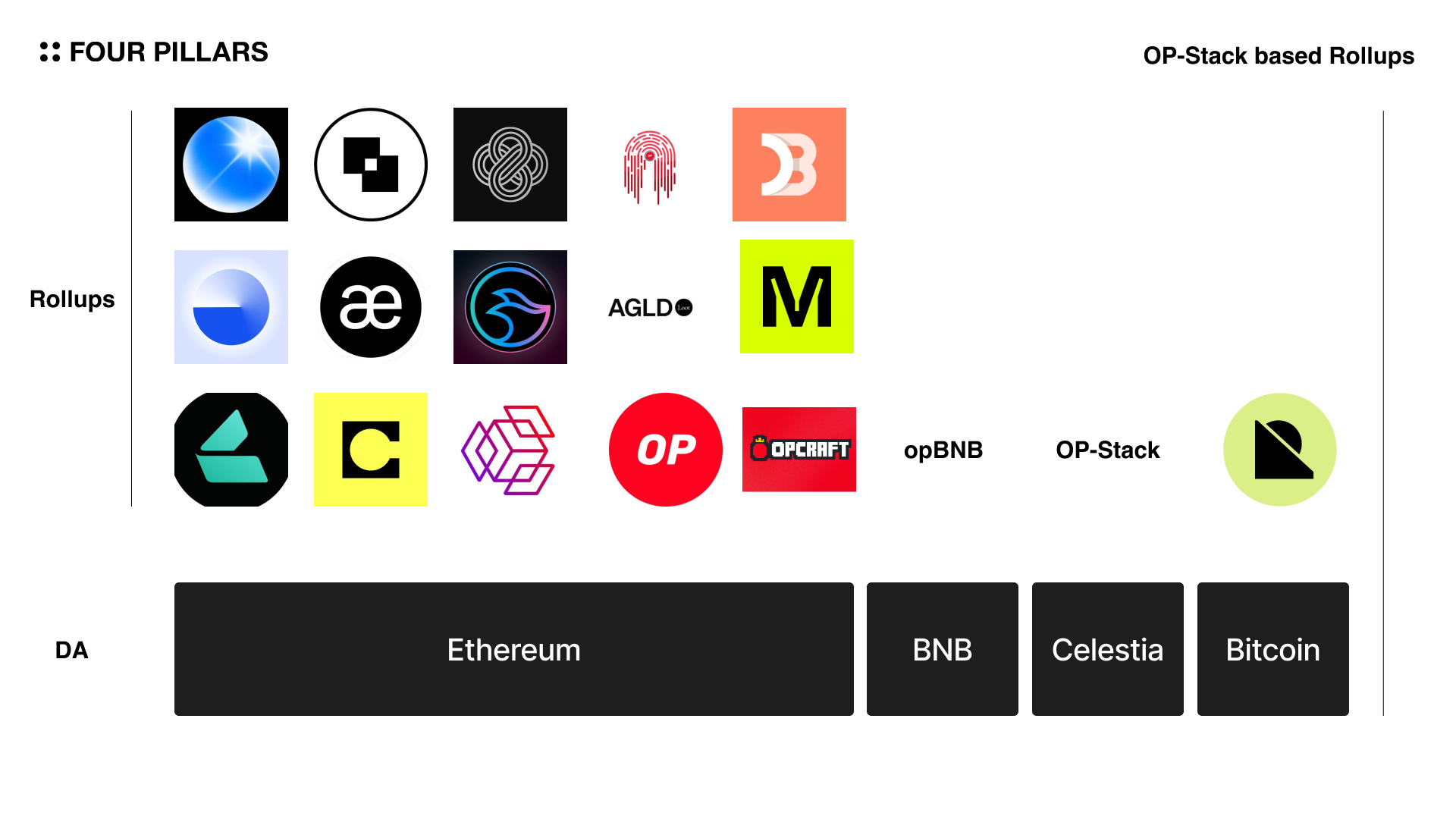
The OP Stack is an open-source development stack that powers Optimism, a highly scalable and interoperable blockchain. It is a modular system consisting of various software components, each implementing a specific layer of the stack. The goal of the OP Stack is to make it easier for developers to build their own blockchains and empower them to focus on what matters most. The OP Stack is not limited to Optimistic Layer 2 rollups but is designed for all kinds of blockchains. The ultimate goal is to create a group of highly integrated chains forming a Superchain.
Optimism Bedrock is the first planned implementation of the OP Stack. It fosters collaboration and prevents redundancy by creating a shared, open-source system for developing new L2 blockchains within the proposed ecosystem. The OP Stack is a collection of software components that make up the infrastructure of the Optimism mainnet. Developers can find more information about the API for each component and how the different components work in tandem to create a modular system.
Citations: https://stack.optimism.io https://optimism.mirror.xyz/fLk5UGjZDiXFuvQh6R_HscMQuuY9ABYNF7PI76-qJYs https://zerocap.com/research-lab/understanding-the-op-stack/ https://www.pcmag.com/encyclopedia/term/op-stack https://docs.celestia.org/developers/intro-to-op-stack/ https://dappradar.com/blog/how-the-op-stack-makes-the-ethereum-ecosystem-more-interoperable